


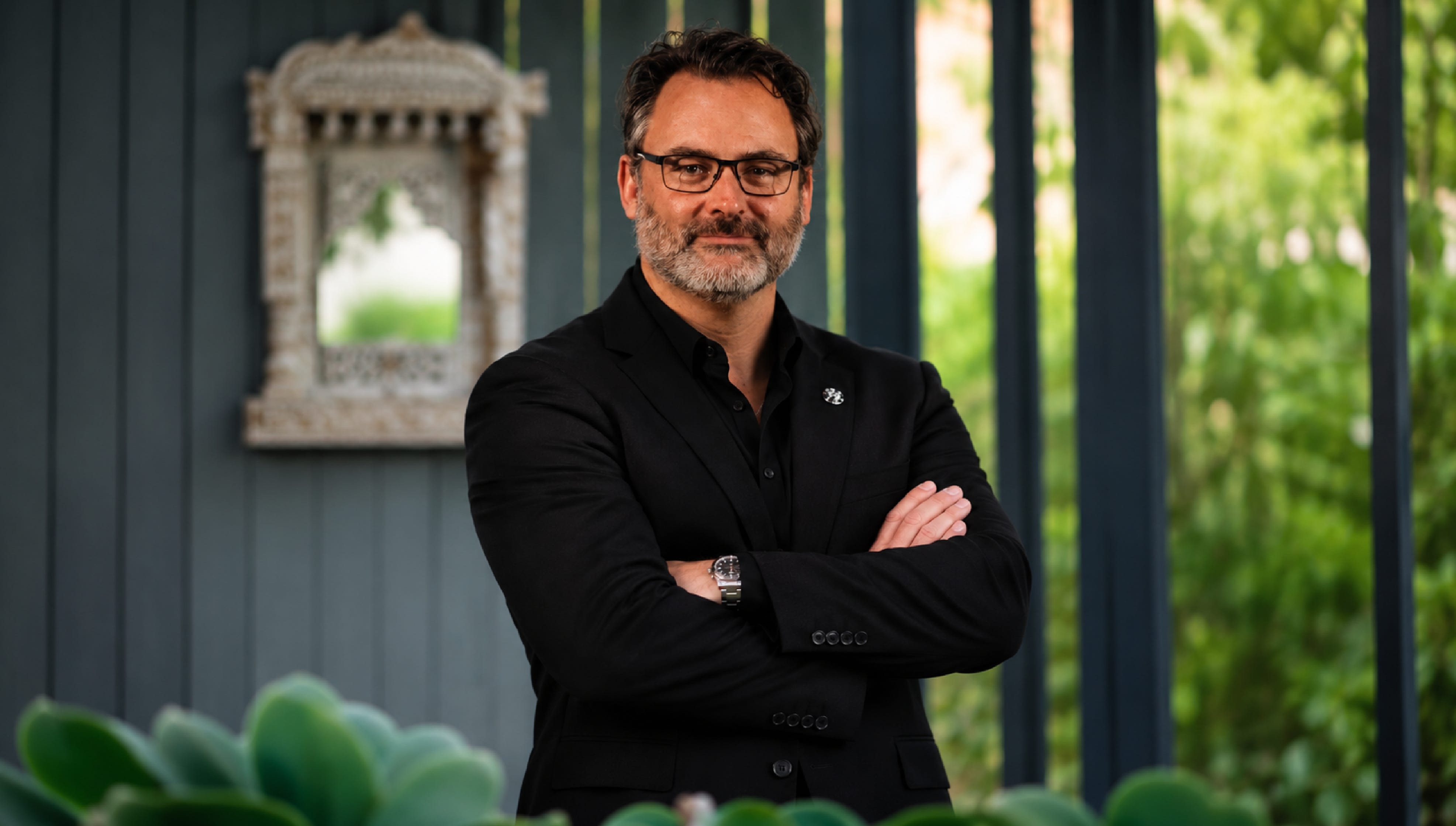
Last week I went to the Screen Music Awards in Brisbane. That’s probably a bit odd for the founder of a commercial music company, so let me explain. There’s a film called I Am Bish. I’d describe it as B grade, though that may be the most generous review it ever gets. I wrote the music for it. My invitation was earned, technically.
The real reason I was there was the launch of the Human Made campaign. I think it’s one of the most important things to happen in Australian music this year, and I’m going to tell you why.
A small badge with a large argument
The Australian Guild of Screen Composers launched Human Made on the night, led by composer Antony Partos. Everyone in the room who backs it wore a little badge shaped like a vinyl record with the copyright symbol on it. That’s the one on my lapel. It’s a very small badge making a very large argument.
The argument goes like this. If AI companies want to train their models on Australian music, they license it, and the artists who opt in get paid. Antony put it better than I can: “Australian creativity is not free training data.”
This lands at a delicate moment. Canberra is looking at changing the copyright framework to suit AI development, and Antony says APRA AMCOS, the organisation that already manages licensing and royalties for Australian music creators, hasn’t been consulted. That’s a bit like redesigning the road rules without inviting anyone who owns a car.
Provenance is the product
Here’s the philosophical part, so bear with me.
A Ford Falcon GTHO Phase III is worth a fortune because of where it came from: Broadmeadows, 1971, built by particular people for a particular reason. Make a perfect replica today and every bolt can match, but the value stays with the original. Its history is the thing you’re paying for.
Music works the same way. A song carries the person who wrote it, the room it was recorded in, the heartbreak or the hangover that produced it. Walter Benjamin called this the “aura” of a work of art. You can’t fake it, and you shouldn’t be allowed to take it either. When you train a model on a lifetime of someone’s songs, the model learns from that history. The person who lived it gets nothing.
This isn’t a bunch of musos saying “we’re being disrupted, don’t touch our cheese.” I’ve said it before and I’ll say it again: we’re not against disruption. Every change up to now has changed how music gets distributed, and every time it has created millions more musicians with stars in their eyes. This is different. It’s theft, and it’s theft on an industrial scale, even at its simplest, reproducing a sound recording, before you get anywhere near the composition.
The economics, which are worse
Now the CEO part.
You can already buy AI generated “royalty free” background music for near zip a month. Plenty of competitors in my industry wave these services away because they sound terrible. That’s the most dangerous assumption in our business. Most venues buy on price, and the pitch from these AI music services has nothing to do with quality. The pitch is that you no longer need a public performance licence. It’s not even quality content proposition. If the music is cheap enough and inoffensive enough, a lot of operators will take it, and every one of those venues stops paying the people who make music.
Follow that through to the end. AI pushes the price of music toward zero, and the value collects in a handful of global hyperscalers who built their models on musicians’ work. That’s how a whole creative economy disappears quietly. It happens one subscription at a time.
The usual objection is that licensing AI training would be too complicated. I find that hard to take seriously. These companies run the most sophisticated metering and billing systems ever built. They can charge you for a fraction of a second of compute. They can certainly work out who to pay for a song.
The music industry already has this infrastructure. Every song Audalize plays in a venue is licensed. When a track plays in a pub in Fremantle or a hotel in Manchester, the songwriter and the label get paid because we report the play. It has worked at enormous scale for decades. Human Made is asking AI to join a system that already works.
Where we stand
Audalize has a simple policy: no AI music, no exceptions. We built Verum to enforce it. Verum checks every artist in our catalogue for evidence of a real human being behind the music, and it never stops checking. It has already found artists signed to major labels with no trace of a person anywhere. Make of that what you will.
We hold this line because our venues pay for music made by people, and those people deserve to be paid. I’m one of them. I front a band, I write songs, and every so often I score a film of debatable quality.
What happens next
If you run a venue, ask your music provider whether what you’re playing is human made and properly licensed. If you work in music, get behind the AGSC and APRA/AMCOS. If you work in Canberra, give the people who make Australian music a seat at the table before the table gets sold.
The composers wore the badge in Brisbane. I’m still wearing mine.